
I am an Amazon Associate and some of the links in this article will provide me with a commission if you buy something after clicking them.
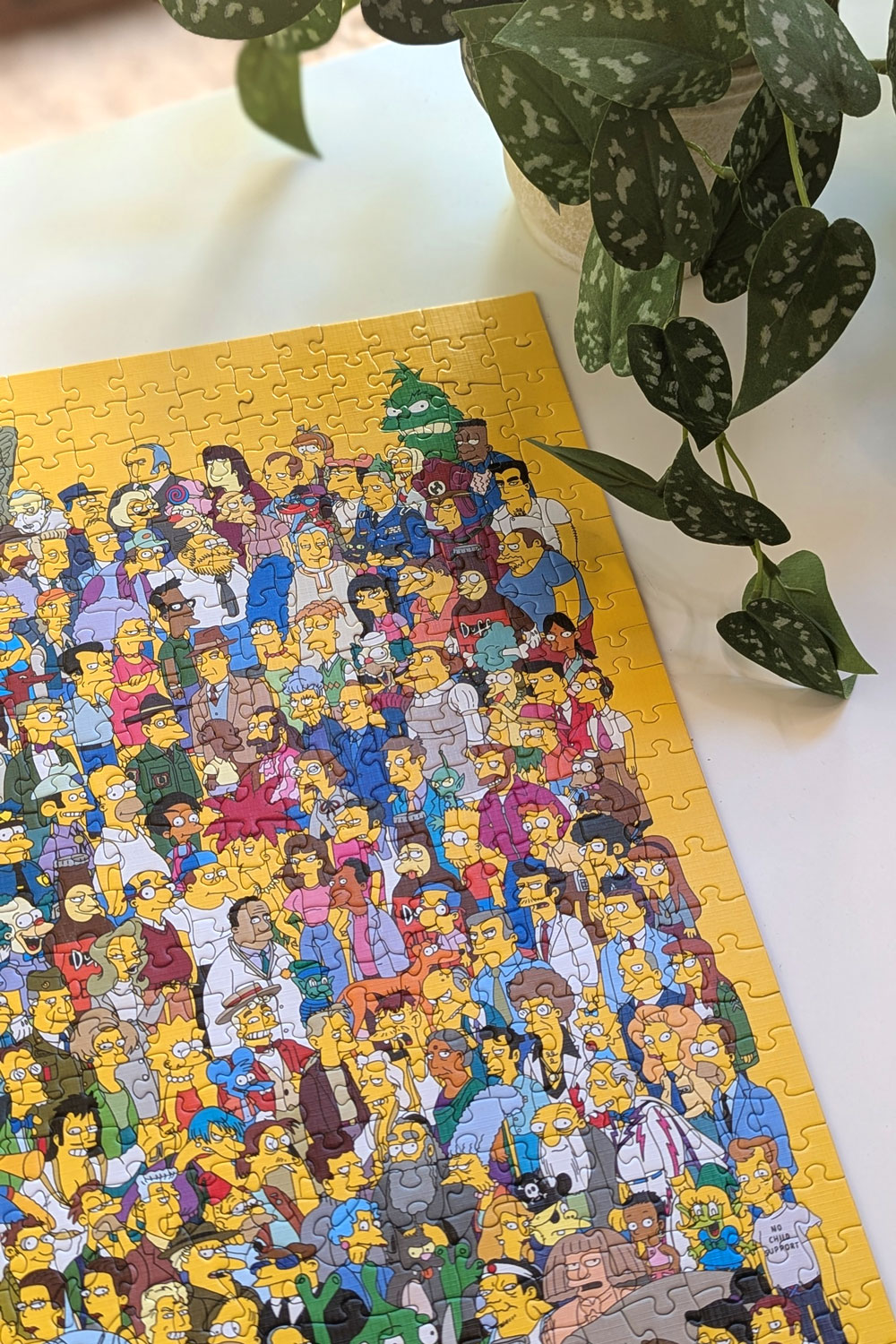
‘The Simpsons Cast of Thousands’ puzzle is a unicorn puzzle of mine and so I was thrilled to find it at my local thrift store a few weeks ago. Growing up, my brother and I were obsessed with The Simpsons. We rarely missed an episode and would watch reruns whenever they were on.
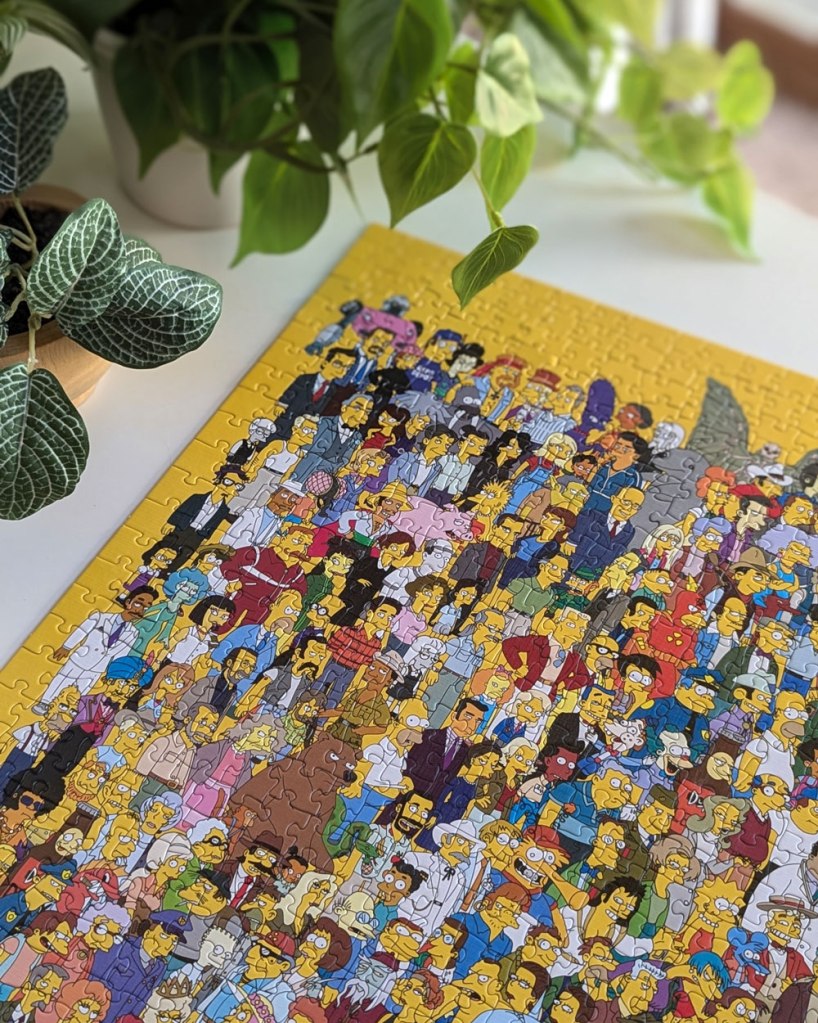
I’ve been wanting this specific puzzle because this exact image was on a poster in my brother’s room when we were growing up. We used to hang out there and quiz each other on the random characters, seeing if we could name them and recall the episodes they appeared in. I spent hours looking at that poster and had it memorized when I was younger. Alas, that was over 20 years ago, so while I remember a surprising number of characters, I can’t recall them all.
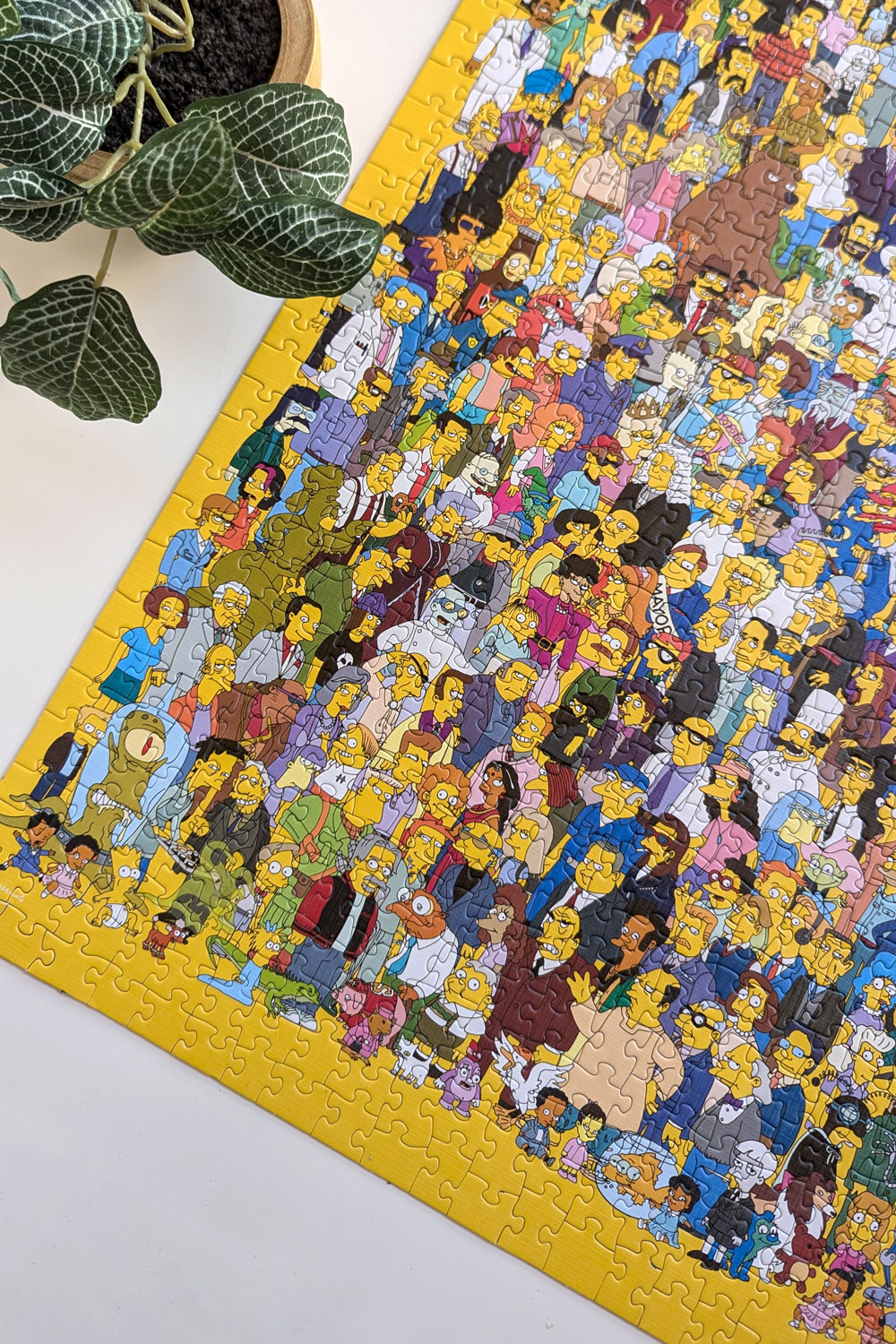
The Op Games (USAOPOLY) is a leading developer and manufacturer of board games, collectibles, and puzzles. They began by creating custom Monopoly games focused on specific cities and areas and have since expanded to a vast collection of officially licensed products featuring popular media franchises. This is the second puzzle I’ve done from The Op Games. The first was ‘Into the Rickverse,’ the Rick + Morty puzzle I did a few months ago.
In terms of quality, I quite like Op Games puzzles. They have a nice linen finish that shows off the vivid and saturated colors of the artwork while resisting glare from lighting. The cardboard backing didn’t feel too thin, and while the fit wasn’t the tightest, it held together reasonably well. Care needs to be taken when moving sections, as you might lose a piece or two. Both puzzles I’ve done from The Op Games were purchased used from a thrift store, so I can’t speak on dust levels from a new standpoint. There wasn’t much by the time I put them together. Neither puzzle had a poster included, which leads me to think they don’t come with one. I missed having a larger printout for this puzzle because the image on the front of the box was covered by text in two places, and the full image on the back is quite small. For such a detailed puzzle, a large printout would have been useful. Again, these were second-hand puzzles, so it’s possible the previous owners didn’t pass it along.
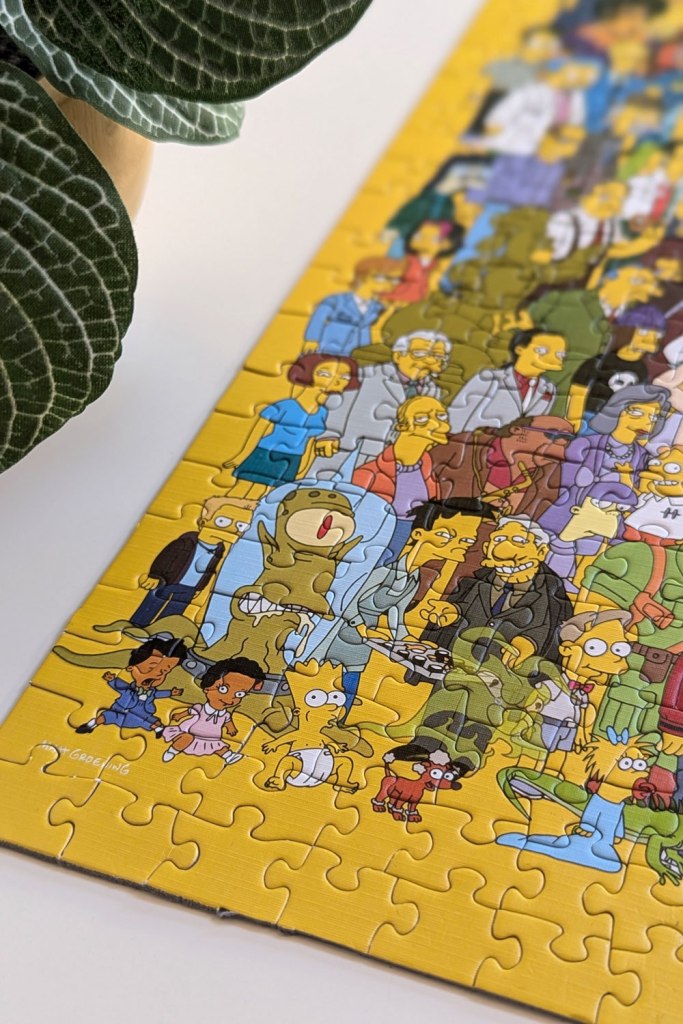
This puzzle was really fun but challenging. Being familiar with the characters and this exact image helped. Identifying which character each element belonged to was easy, but finding where that character was among the mass of others was difficult. I often found myself holding a part of a character I had been working on earlier but completely forgetting where they were located. I can’t tell you how many times I set down a piece to put back once I located the character, only to find the character moments later and then not be able to find the piece I just set down. This is a common issue with images where all the elements are roughly the same size and the colors are evenly distributed. I enjoyed that this puzzle wasn’t something you could just slap together. It took me two afternoons to complete, and my husband helped towards the end.
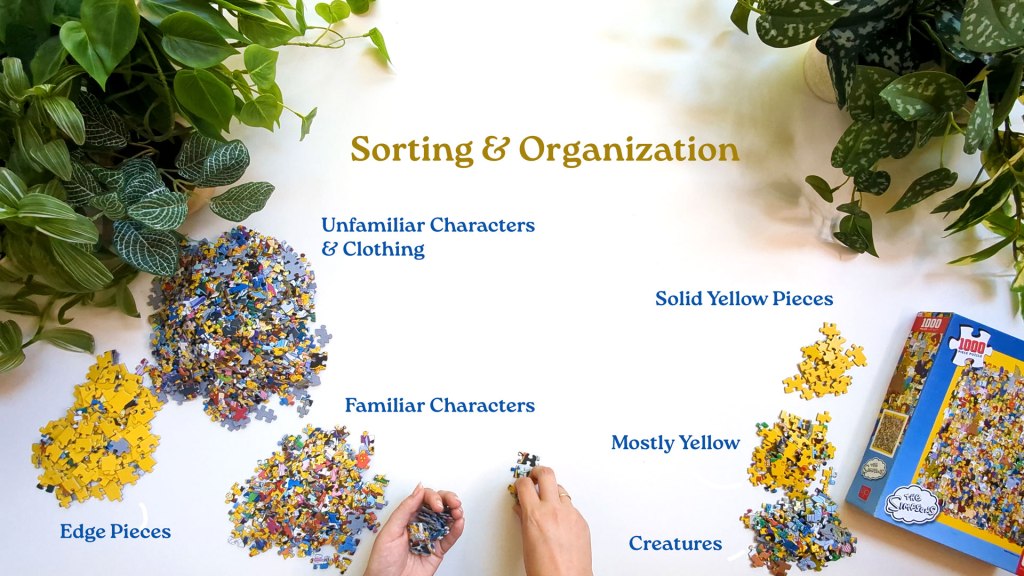
My strategy was to sort the pieces first, as usual. Instead of sorting by color, I sorted pieces by characters I was familiar with in one pile and pieces with less familiar characters and unidentifiable clothing parts in another. I also sorted out the yellow border and made a smaller pile for character pieces with a significant amount of the yellow background. The smaller pile was useful as those pieces were primarily the characters closest to the edge. The edge pieces were nearly 100% yellow, so instead of starting with the edge, I started assembling the characters I remembered. It didn’t take long to finish the first pile, and then I moved on to the larger pile with the less familiar characters and remaining clothing. As I mentioned, it was easy to recognize where a piece needed to go but difficult to locate that section among so many characters and elements.
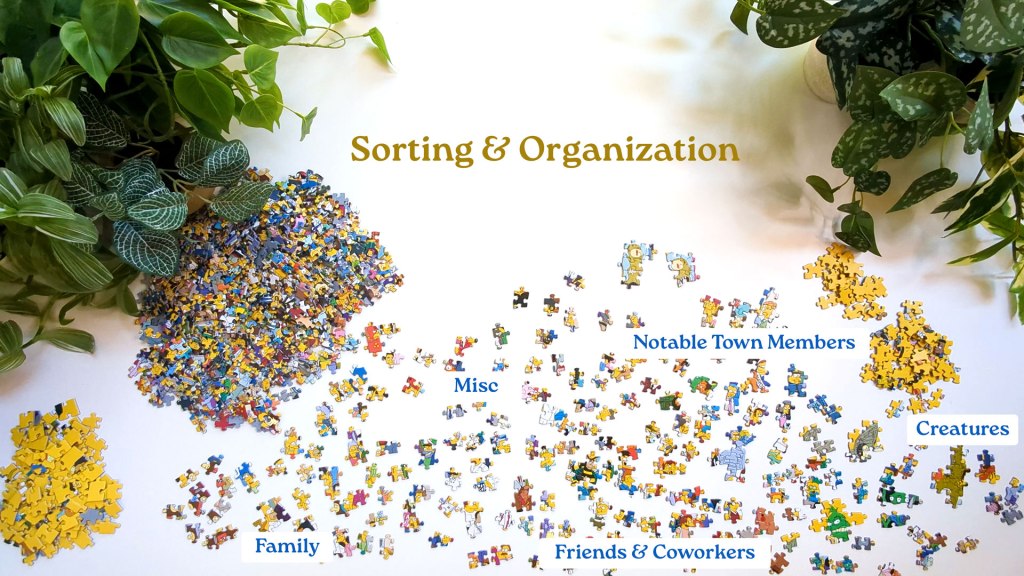
I used a few organizational tricks beyond sorting by familiar elements. Early on, I placed the characters in certain locations on my table based on their relationship to the main characters in the show. Direct Simpsons family members were placed off to the left. This puzzle includes not only the main family members as you have come to know them but also the different variations as well, like the original style of artwork from the first episode. School-related characters (teachers, classmates, bullies, staff, and superintendents) were placed directly in front of me. Friends of the family and coworkers were placed off to my right, and above that, I put important town figures. I had a small pile for animals and creatures (elves, monsters, aliens) further to my right. This layout was successful for building individual characters as I could spot the exact character I was working on much quicker. It started to break down once I ran out of space and needed to place the characters approximately where they were going to end up.
There is one organizational trick I started but didn’t fully commit to, which, in hindsight, I should have. After the desk descended into chaos, I began sorting the remaining pieces by the color of the characters’ clothing. I started with white shirts and later added green clothing into two sections of my desk. I wish I had sorted every remaining piece by clothing color and placed faces in their own section. Looking for a green or white shirt for a character was relatively simple; I just wasn’t ready to commit to the 20 minutes it would take to complete that sorting. I also wasn’t frustrated enough to find it necessary. I think if I had really been struggling, I would have continued sorting in this way but I’m still pleased with the experience having not done it.
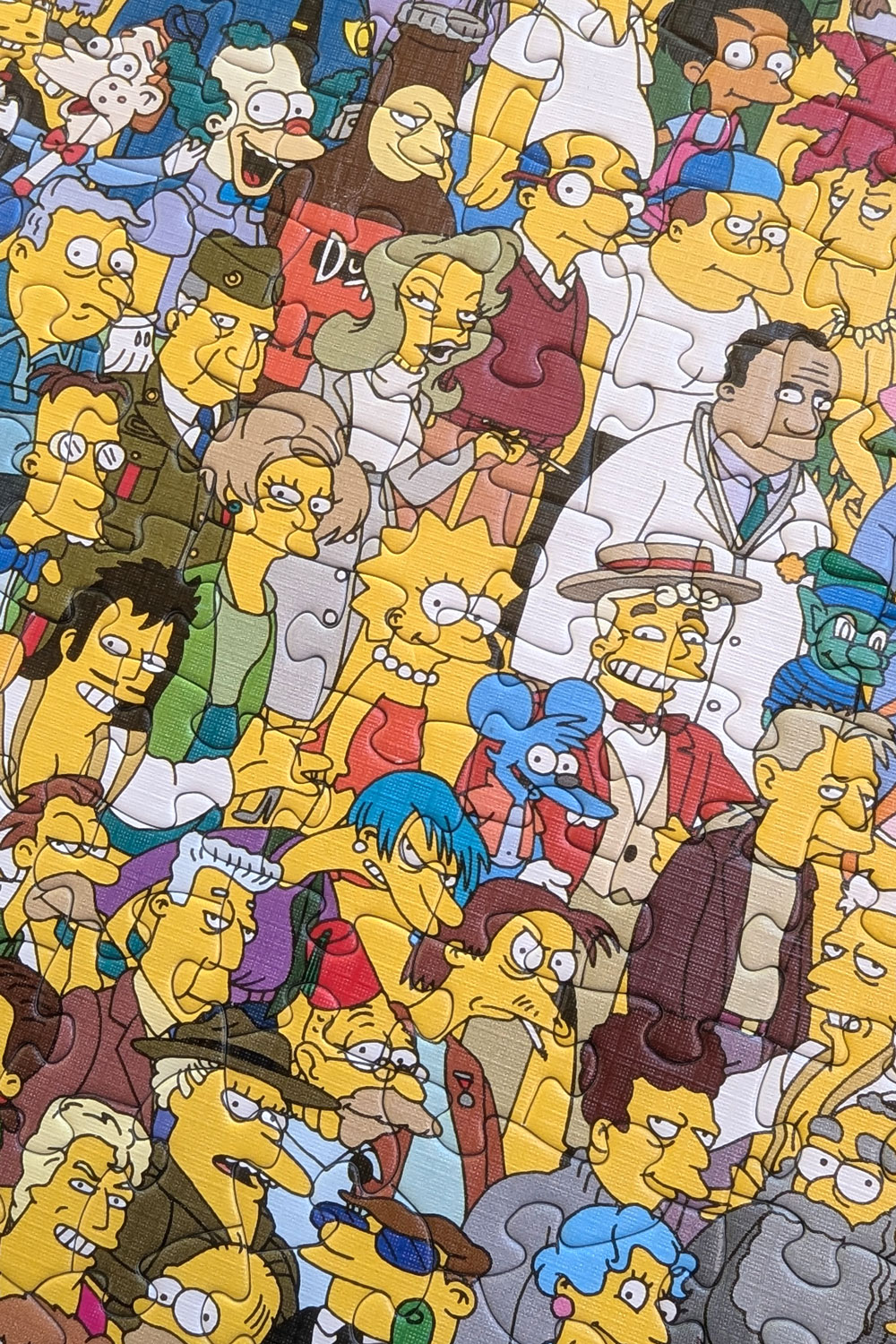
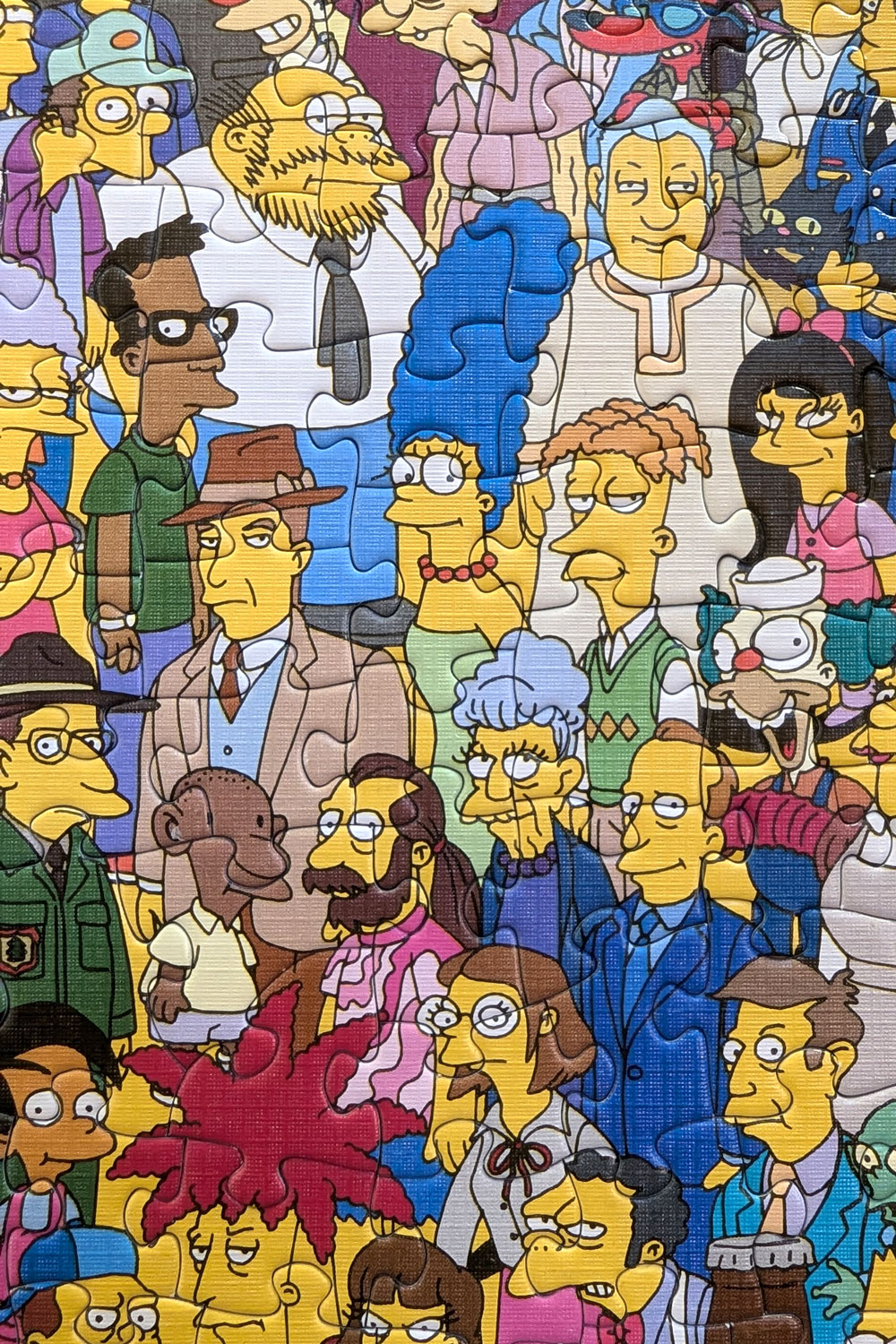
I don’t usually use posters or images of the puzzle when I assemble puzzles. I might reference the image once or twice (or more when it’s a trickier puzzle), but I try not to use it much. I used the box image non-stop with this puzzle. It wasn’t so much that I needed it to figure out where the pieces went, but to help me remember where the section/character I was looking for was. The table was so busy with pieces that I had a hard time finding landmark characters, let alone the more obscure ones.

Familiarity with the characters helped, but not as much as I thought it would. The most helpful thing I could have used was a better short-term memory. That and perhaps a bigger table so I could spread out the pieces more. Realistically, I probably should have sacrificed the visual of having my plants on the table for my video, as they take up a good 25-30% of my table space.
This was a fun puzzle to work on and I’m glad that it wasn’t just a quick build. This style, with the mass of different characters is different from my usual choice and I probably wouldn’t have picked it if I didn’t have the nostalgia of knowing the image so well from childhood. I’m glad that I worked on it though as it was a nice change from puzzles with less details. It made me think a little bit more on the best organizational methods and tactics to use when putting this puzzle together. This would be a really good puzzle to work on with a group of people. Being able to discuss pieces and rely on the memory of multiple people would be handy with this one, especially if the people there are familiar with the show. That being said, I don’t necessarily see this as a puzzle I plan on doing again so is likely to go into my swap pile.
Links & Details
Want to put The Simpson’s Cast of Characters puzzle together? Buy it here!
Puzzles by The Op Games that are on my Wishlist




Gradient Cubes 1000 Piece Jigsaw Puzzle
DC Villains Forever Evil 1000 Piece Jigsaw Puzzle
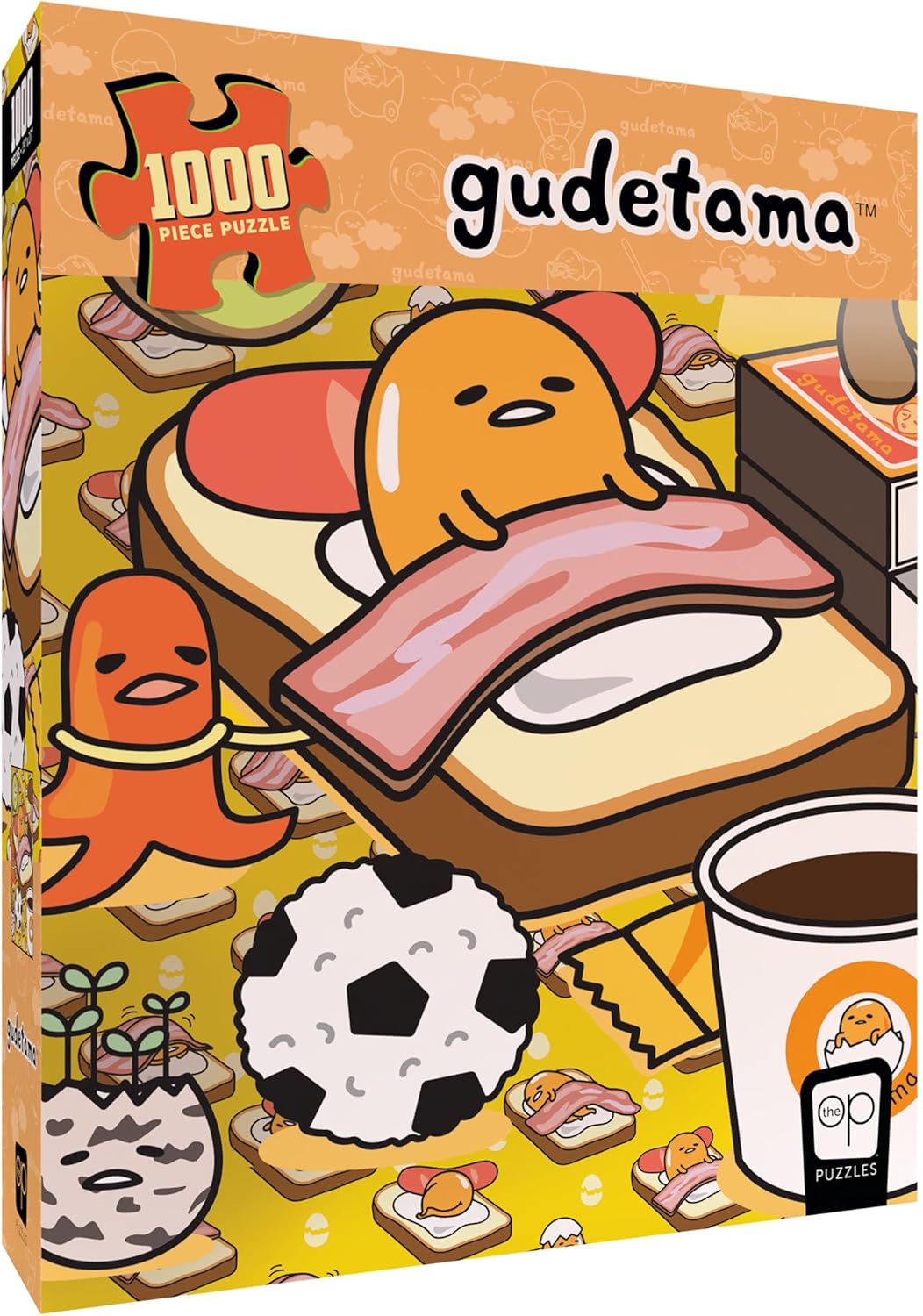
Gudetama “Work from Bed” 1000 Piece Jigsaw Puzzle
Bob’s Burgers Greetings from Wonder Wharf 1000 Piece Jigsaw Puzzle
Gudetama “Amazing Egg-Ventures” 1000 Piece Jigsaw Puzzle
 Every Little Piece
Leave a comment